
Senior Fellows
Fellows
Research Fellows
Senior Fellows
The Elm Institute’s Senior Fellows contribute to, collaborate with, and advise in the intellectual life of the Institute.

Ross Douthat
New York Times
Since 2009 Ross Douthat has been an Op-Ed columnist at The New York Times where every Wednesday and Sunday he has written on politics, religion, moral values and higher education. Previously, he was a senior editor at The Atlantic and a blogger for theatlantic.com. He is the author of Privilege: Harvard and the Education of the Ruling Class (2005), Bad Religion: How We Became a Nation of Heretics (2012), Decadence: How We Became the Victims of Our Own Success (2020), The Deep Places: A Memoir of Illness and Recovery (2021), and, most recently, Believe: Why Everyone Should be Religious (2025). He is the film critic for National Review.
Since his appointment as Writer-in-Residence Ross has led intensive seminars for undergraduates hosted at Elm Institute and taught a number of courses at Yale University. Past Elm seminars include “Life Under Decadence,” and “Liberalism and Its Critics.” At Yale, Ross taught a course on conservativism with Samuel Moyn (Yale Law School) and Scott Shapiro (Yale Law School). In Spring 2021 and Fall 2023 he taught a course on the crisis of liberalism with Bryan Garsten (Yale, Politics and Humanities) and Samuel Moyn (Yale Law School). In Spring 2024 he taught a class on materialism and religion in the ancient and modern world with Dan Greco (Yale, Philosophy).

Carlos Eire
Yale University
Carlos Eire (G ‘97) is the T. Lawrason Riggs Professor of History and Religious Studies. He specializes in the social, intellectual, religious, and cultural history of late medieval and early modern Europe, with a focus on both the Protestant and Catholic Reformations; the history of popular piety; and the history of the supernatural, and the history of death. He developed and regularly teaches one of the most popular courses in the Department of Religious Studies, “The Catholic Intellectual Tradition.” Before joining the Yale faculty in 1996, he taught at St. John’s University in Minnesota and the University of Virginia, and was a member of the Institute for Advanced Study in Princeton for two years.
He is the author of War Against the Idols (1986); From Madrid to Purgatory (1995); A Very Brief History of Eternity (2010); Reformations: The Early Modern World (2016), winner of the R.R. Hawkins Prize for Best Book of the Year from the American Publishers Association; and The Life of Saint Teresa of Avila (2019). His memoir Waiting for Snow in Havana (2003) won the National Book Award in Nonfiction in the United States and has been translated into more than a dozen languages.

Bryan Garsten
Yale University
Bryan Garsten is Professor of Political Science and the Humanities at Yale. He is the author of Saving Persuasion: A Defense of Rhetoric and Judgment (Harvard University Press, 2006) as well as articles on political rhetoric and deliberation, the meaning of representative government, the relationship of politics and religion, and the place of emotions in political life. Garsten is now finishing a book called The Heart of a Heartless World that examines the ethical, political and religious core of early nineteenth century liberalism in the United States and France. He has also edited Rousseau, the Enlightenment, and Their Legacies, a collection of essays by the Rousseau scholar Robert Wokler (Princeton University Press, 2012). His writings have won various awards, including the First Book Prize of the Foundations of Political Theory section of the American Political Science Association. In 2012-2013 he served as Chair of a committee overseeing the development of a common curriculum in the liberal arts for Yale-NUS College in Singapore. His work in the classroom earned him the 2008 Poorvu Family Prize for Interdisciplinary Teaching. He has served as Director of Undergraduate Studies for Yale’s major in Ethics, Politics and Economics and the Director of Graduate Studies for the Department of Political Science. In 2016 he founded the Citizens, Thinkers, Writers program for students in the New Haven public schools. A graduate of Harvard College, he received his MPhil from the University of Cambridge and his PhD from Harvard University.

Sherif Girgis
University of Notre Dame Law School
Sherif Girgis is a professor at Notre Dame Law School. His work in constitutional law and theory has appeared or is forthcoming in venues including the Harvard Law Review, the Columbia Law Review, the New York University Law Review, the Virginia Law Review, the University of Pennsylvania Law Review, the Harvard Law Review Forum, and the Yale Law Journal Forum. He is also editor of a First Amendment casebook formerly edited by Fred Schauer, and coeditor with Mike Dorf of a constitutional law casebook formerly coedited by Schauer and Dick Fallon. His scholarship has been cited by Justices and judges and featured in venues including the New York Times.
Before joining Notre Dame, he practiced appellate and complex civil litigation at Jones Day in Washington, D.C., having earlier served as a law clerk to Justice Samuel Alito of the U.S. Supreme Court and Judge Thomas Griffith of the U.S. Court of Appeals for the D.C. Circuit. Girgis earned his Ph.D. in philosophy at Princeton, his J.D. at Yale Law School, a master’s (B.Phil.) in philosophy at the University of Oxford as a Rhodes Scholar, and a bachelor’s in philosophy at Princeton, summa cum laude.
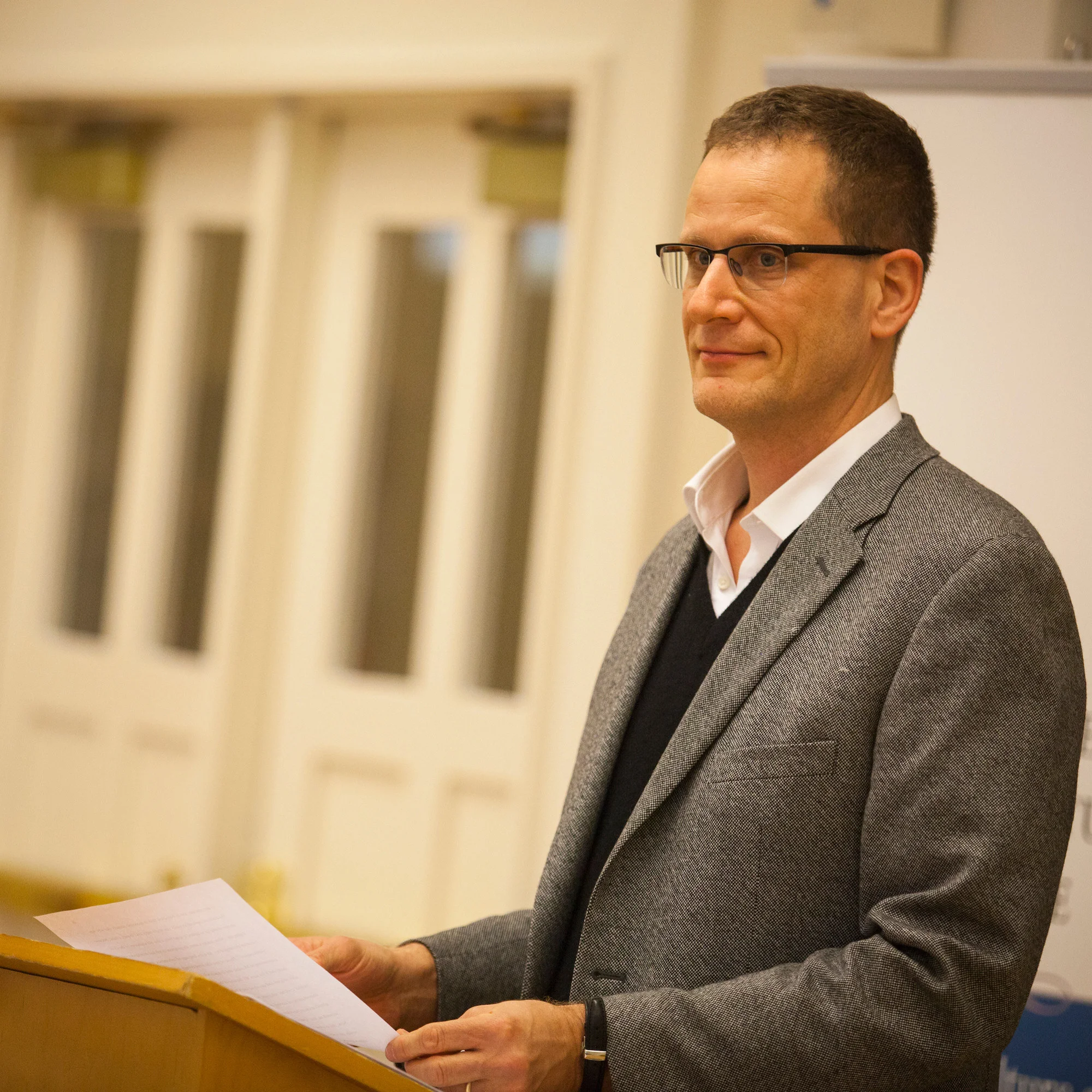
Philip Gorski
Yale University
Philip Gorski is Professor of Sociology and Religious Studies at Yale and Co-Director of Yale's Center for Comparative Research. His empirical work focuses on topics such as state-formation, nationalism, revolution, economic development, and secularization with particular attention to the interaction of religion and politics. Other current interests include the philosophy and methodology of the social sciences and the nature and role of rationality in social life. He is the author of The Disciplinary Revolution: Calvinism and the Growth of State Power in Early Modern Europe (University of Chicago Press, 2003), Max Weber’s Economy and Society: A Critical Companion (Stanford University Press, 2004), and The Protestant Ethic Revisited (Temple University Press, 2011). He was educated at Deep Springs College and Harvard University and received his PhD from University of California, Berkeley.

James Murphy
Dartmouth College
James Murphy ('80 G'90) is Professor of Government at Dartmouth College, where he has taught since 1990. After graduating from Yale College, he earned a Master’s in City Planning from M.I.T. and worked as a city planner in the City of New York. His Ph.D. in Philosophy and Political Science is from Yale University (1990). His research interests include: Aristotle, jurisprudence, semiotics, political economy, philosophy of education, and political theology. In 2008, Professor Murphy founded the Daniel Webster Project at Dartmouth College to provide greater structure and focus for the liberal arts experience. The Webster Project sponsors conferences and lectures as well as proposals for curricular reform. His books include The Moral Economy of Labor: Aristotelian Themes in Economic Theory (Yale University Press, 1993), The Philosophy of Positive Law (Yale University Press, 2005), The Philosophy of Customary Law (Oxford University Press, 2014), A Genealogy of Violence: René Girard in Dialogue (Sussex Academic Press, 2018), and Your Whole Life (University of Pennsylvania Press, 2020) and, most recently, Deification in Classical Greek Philosophy and the Bible (Cambridge University Press, 2024).

James L. Nolan, Jr.
Williams College
James Nolan, Jr., is the Washington Gladden 1859 Professor of Sociology at Williams College. His teaching and research interests fall within the general areas of law and society, culture, technology and social change, and historical comparative sociology. His books include The Therapeutic State: Justifying Government at Century’s End (NYU Press, 1998), Reinventing Justice: The American Drug Court Movement (Princeton University Press, 2001), Legal Accents, Legal Borrowing: The International Problem Solving Court Movement (Princeton University Press, 2009), What They Saw in America: Alexis de Tocqueville, Max Weber, G.K. Chesterton, and Sayyid Qutb (Cambridge University Press, 2016), and, most recently, Atomic Doctors: Conscience and Complicity at the Dawn of the Nuclear Age (Harvard University Press, 2020). He is the recipient of several grants and awards including National Endowment for the Humanities fellowships and a Fulbright scholarship. He has held visiting fellowships at Oxford University, Loughborough University, and the University of Notre Dame. He is a graduate of University of California, Davis, and received his PhD from the University of Virginia.

Steven B. Smith
Yale University
Steven B. Smith is the Alfred Cowles Professor of Political Science at Yale University. His research covers the history of political philosophy with special attention to the problem of the ancients and moderns, religion and politics, and representative government. While at Yale, he has also served as the Director of Graduate Studies in Political Science, Director of the Special Program in the Humanities, Acting Chair of Judaic Studies, and as the Master of Branford College. He is also Co-Director of the Yale Center for the Study of Representative Institutions at the MacMillan Center, which studies the theory and practice of representative governments in the Anglo-American tradition. He is the recipient of the Ralph Waldo Emerson Prize and the Lex Hixon ’63 Prize for Teaching Excellence in the Social Sciences. Professor Smith is the author of Hegel’s Critique of Liberalism (1989), Spinoza, Liberalism, and Jewish Identity (1997), Spinoza’s Book of Life (2003), Reading Leo Strauss (2006), The Cambridge Companion to Leo Strauss (2009), Political Philosophy (2012), Modernity and Its Discontents (2016), and Reclaiming Patriotism in an Age of Extremes (2021).

Noël Valis
Yale University
Noël Valis (PhD, Bryn Mawr College) is Kingman Brewster, Jr. Professor of Spanish and Portuguese at Yale University. Her research interests are centered on modern Spanish literature, culture, and history. Her books include The Culture of Cursilería: Bad Taste, Kitsch and Class in Modern Spain (Duke University Press, 2002), which won the Katherine Singer Kovacs Prize, Teaching Representations of the Spanish Civil War (Modern Language Association, 2007), and Sacred Realism: Religion and the Imagination in Modern Spanish Narrative (Yale University Press, 2010). Her translation of Noni Benegas’ poetry, Burning Cartography (Host Publications, 2008), received the New England Council of Latin American Studies Best Book Translation Prize. A novella, The Labor of Longing (Main Street Rag Publishing, 2014), was a Finalist for the Prize Americana for Prose and a Finalist in two categories, Novella and Regional Fiction, for the Next Generation Indie Book Awards. Her Lorca After Life (Yale University Press, 2022) was awarded the 2023 PROSE Award for Literature by the Association of American Publishers. In 2017, she was awarded the Victoria Urbano Academic Achievement Prize by the International Association of Hispanic Women’s Literature and Culture. A Corresponding Member of the Royal Spanish Academy, John Simon Guggenheim Fellow and National Endowment for the Humanities Fellow, Professor Valis was appointed a member of the NEH’s National Council on the Humanities in 2019.
Fellows
The Elm Institute’s Fellows contribute to and collaborate with the intellectual life of the Institute.

Gregory M. Collins
Yale University
Gregory M. Collins is a Lecturer in the Program on Ethics, Politics, and Economics and Department of Political Science at Yale University. He is also the Director of Undergraduate Studies in the EP&E Program. Greg’s book on Edmund Burke’s economic thought, titled Commerce and Manners in Edmund Burke’s Political Economy, was published by Cambridge University Press in 2020. His scholarly and teaching interests include political theory, the intellectual origins of liberalism and conservatism, the philosophical and ethical foundations of capitalism, constitutional theory and practice, and African-American political thought. Greg has published peer-reviewed articles and chapters on Burke, Adam Smith, Aristotle, Frederick Douglass, F.A. Hayek, John Maynard Keynes, Leo Strauss, Eric Voegelin, Britain’s East India Company, and the political philosophy of taxation. His popular writings can be found in Fusion, Law & Liberty, Modern Age, National Affairs, National Review, and University Bookman. Greg’s current book project is a study of the idea of civil society in early African-American political thought. Greg won the 2024 Lux et Veritas Faculty Prize, awarded annually to a Yale faculty member who promotes intellectual variety in and out of the classroom; and the Acton Institute’s 2020 Novak Award, awarded annually to one junior scholar who conducts research on the intersection of liberty and virtue. Greg received his MA and PhD in Politics from The Catholic University of America in 2017 and his B.A. in Political Science from UMass Amherst in 2009. He is married to his college sweetheart and has two young daughters (with a third on the way!). In his free time Greg enjoys rooting for Boston professional sports teams, playing Scrabble and chess, and beating his students at pickup basketball.

Mordechai Levy-Eichel
Yale University
Mordechai is a Lecturer in the Political Science Department and Humanities Program at Yale, where he hides his formal academic identity as a historian, and his escapades as a critic, and general scholarly skeptic of scholarship. He primarily works on the history and philosophy of learning and education, having had a fairly idiosyncratic education himself, ranging from various yeshivot to homeschooling to the University of Chicago. Trained as an early modern Atlantic and European historian who somehow often spends his time exploring the bowels of nineteenth-century America, he is writing an episodic history on the rise of the modern university and the research ideal. He has published both in academic journals and in popular magazines, ranging from Intellectual History Review to Tablet to the Chronicle of Higher Education. His dissertation on the spread of early modern mathematical learning was awarded the Elizabethan Prize for “outstanding work on literature, arts, or culture of the Renaissance,” and in 2022 he was the inaugural winner of the Lux et Veritas faculty teaching award which “recognizes a Yale faculty member who actively fosters intellectual diversity for students in and out of the classroom.”

Danilo Petranovich
Abigail Adams Institute
Danilo Petranovich (G’07) is the Director of Abigail Adams Institute in Cambridge, MA. Dr. Petranovich has taught political science at Duke and Yale Universities, where he offered courses on liberalism and conservatism in the United States, American political thought, the American presidency, ethical leadership, nationalism and patriotism, and the history of Western political philosophy, as well as two seminars on William F. Buckley’s role in American politics (Dr. Petranovich served for seven months as Bill Buckley’s amanuensis). Dr. Petranovich is currently writing a book (under contract with Yale University Press) about the three-decade duel between Lincoln and Stephen Douglas, which resulted, he argues, in a transformation of American nationhood. He received his BA from Harvard and his PhD in Political Science from Yale.
Senior Fellows
Fellows
Research Fellows
Research Fellows
The Elm Institute’s Research Fellows are early career scholars who, while engaging in their scholarly work, contribute to the intellectual life of the Institute.

Kacey Reeves West, PhD
Kacey Reeves West is an economist interested in the intersection between philosophical accounts of human flourishing and the market economy; in particular, how human relationships and sentiments affect firm performance. Her research has been published in Public Choice, Journal of Business Ethics, Review of Austrian Economics, and Hispanic Journal. She has taught at George Washington University, Catholic University of America, Christendom College, and George Mason University. Dr. West holds a PhD in Economics from George Mason University and a BA in Economics and Spanish from Hillsdale College.
Dr. West lives in New Haven with her husband Garrett West (Yale Law School) and three children.
Curriculum Vitae

Charlotte Duffee, PhD
Charlotte Duffee is moral philosopher. She is currently a Postdoctoral Fellow at the Human Flourishing Program at Harvard University. Her work explores the social and cultural factors at play when moral problems become objects of medical theory, assessment, and treatment. Her work has appeared in journals such as Bioethics, Medical Humanities, and the Journal of Medical Ethics. Dr. Duffee received her PhD in the history and philosophy of science at the University of Toronto and holds additional degrees from the University of Toronto, the New School, and New York University.
Dr. Duffee lives in central CT with her husband and children, where they maintain a farm.